Profiles arrived — a diary of what you've grown, a fingerprint of where you spend your time, and an identity mark that shows a different face depending on who is looking.
The last post here was in May. Work stopped for a while for reasons that had nothing to do with the product — what follows is a few days of building, not a quiet summer of it.
What landed is the part of ForestLynk that was always missing: people having a presence beyond a handle.
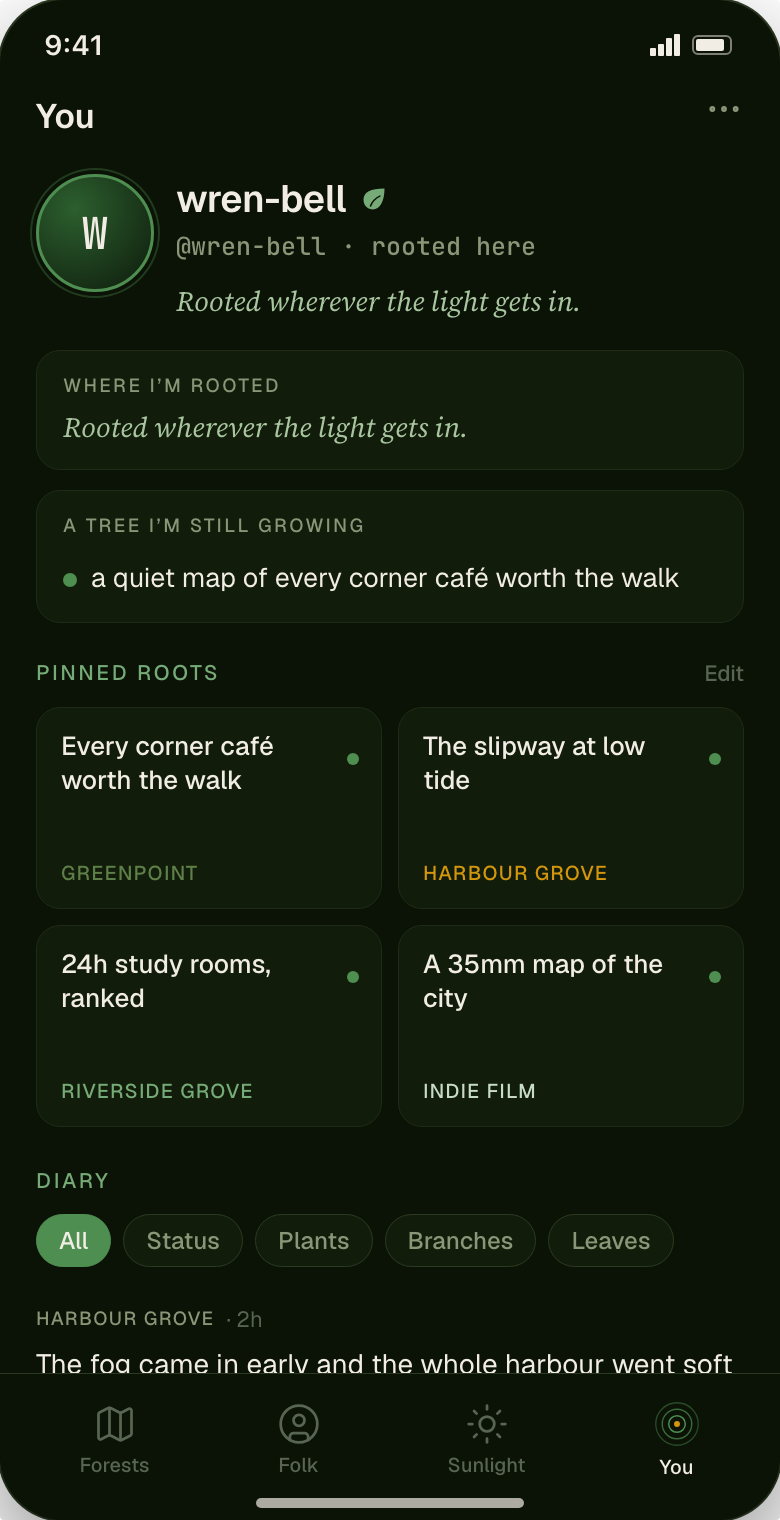
Your own profile — prompts, pinned roots, and the diary underneath
A diary, not a feed
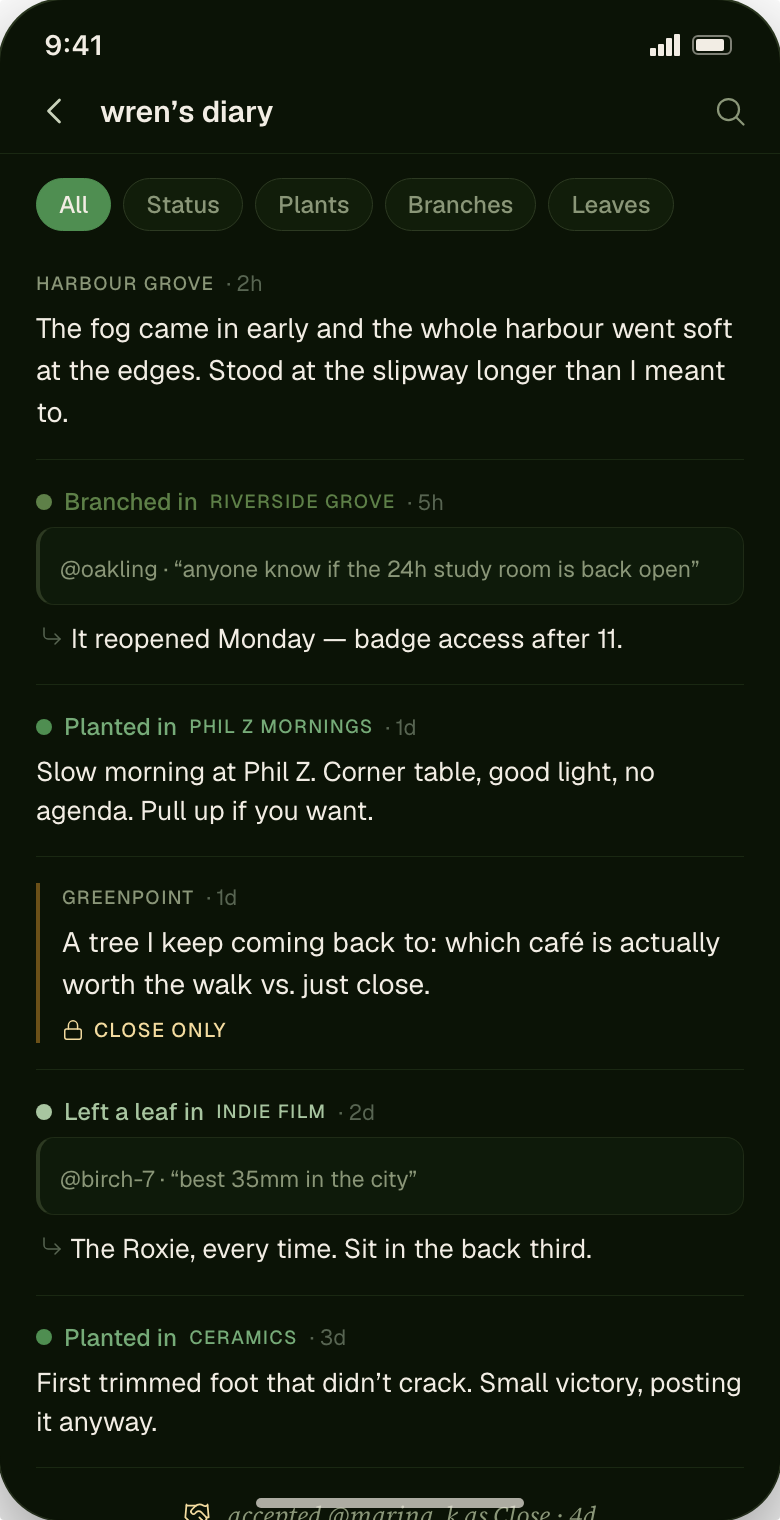
A profile opens on a gardening record. Everything you’ve planted, branched and leafed, in the order it happened, with no ranking of any kind — the oldest thing you did is as reachable as the newest.
It is deliberately not a feed. Nothing is scored, nothing surfaces because it performed well, and a quiet week looks like a quiet week.
Strictly chronological, filterable by kind, and never reordered by anything else
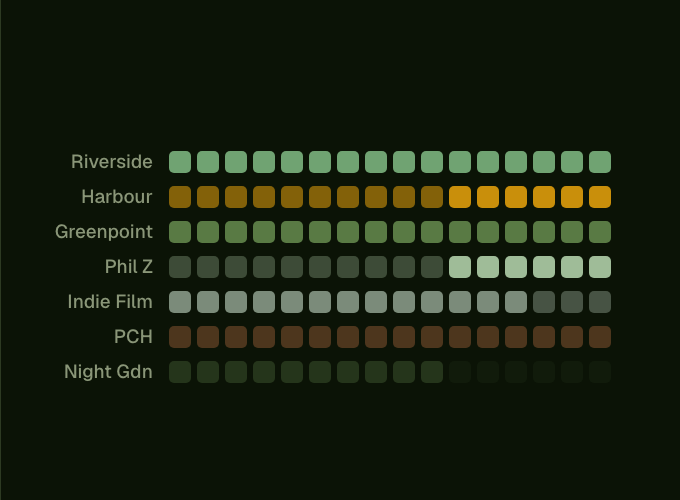
Underneath it sits a fingerprint — a grid of the forests you spend time in, week by week. It shows shape rather than counts. Where attention actually goes, without turning it into a scoreboard.
Rows are forests, columns are weeks — intensity, not totals
What each person is allowed to see
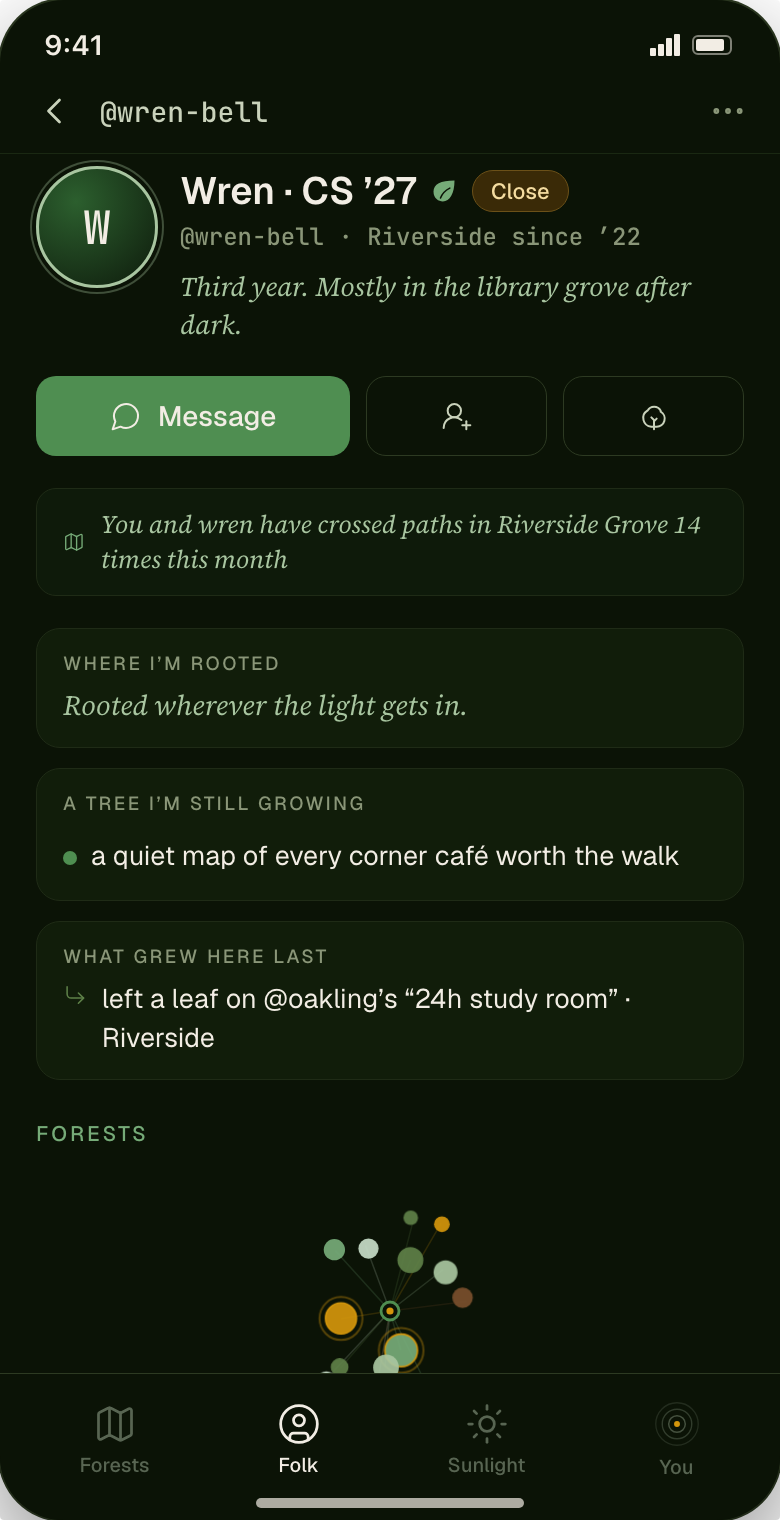
Almost none of this is public. A profile is projected through your stage with the person looking at it, so the same profile is a different document to four different people.
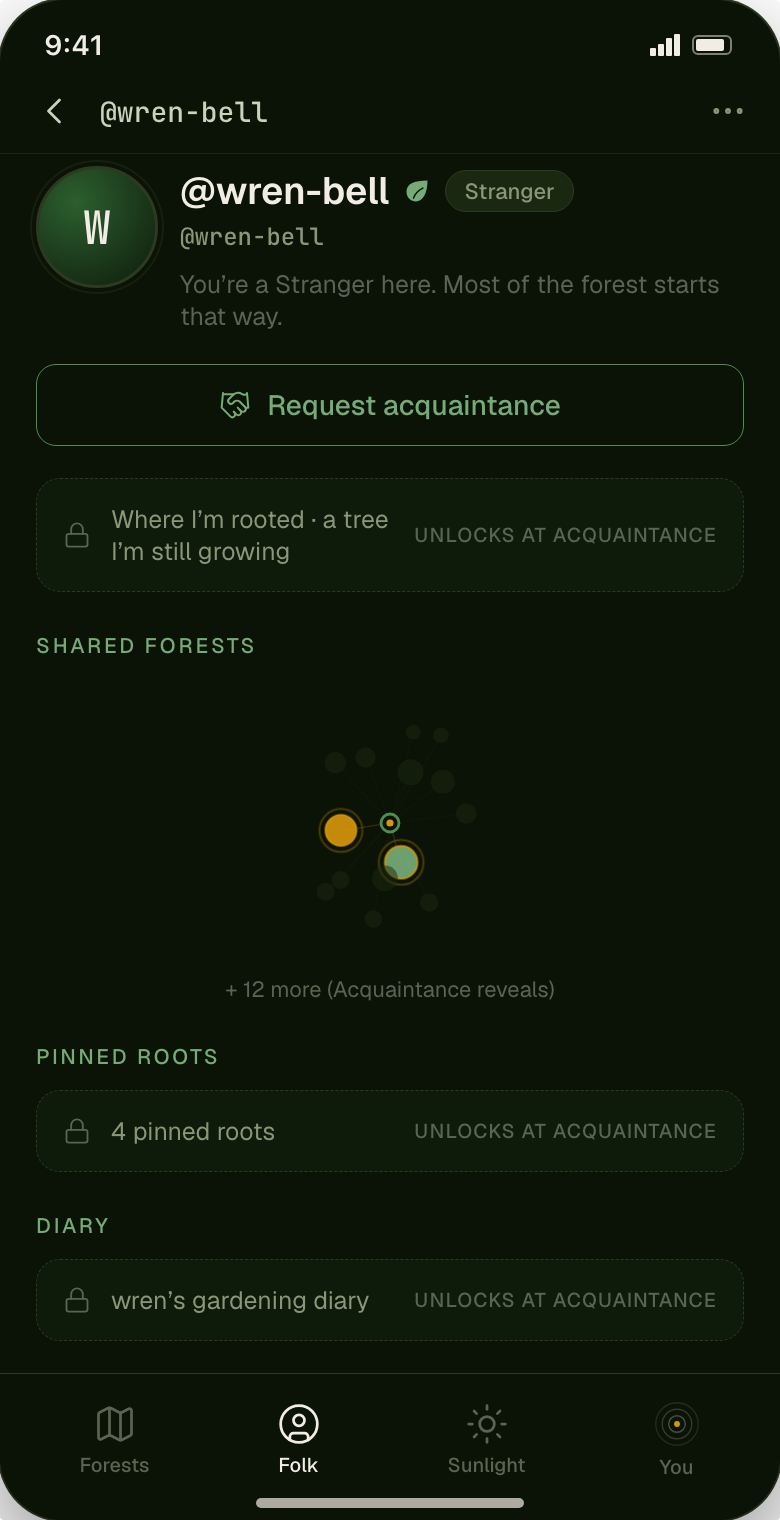
A stranger gets an outline: sections named, contents absent, each one saying what it would take to open it. Someone Close gets the whole record.
To a stranger — the sections exist, and say what would open them
The locked parts are named but empty, which is the point: you can tell something is there without seeing any of it. What you aren’t entitled to never leaves the server, so there is nothing on the device to leak.
The same profile, to someone Close
Different faces for different people
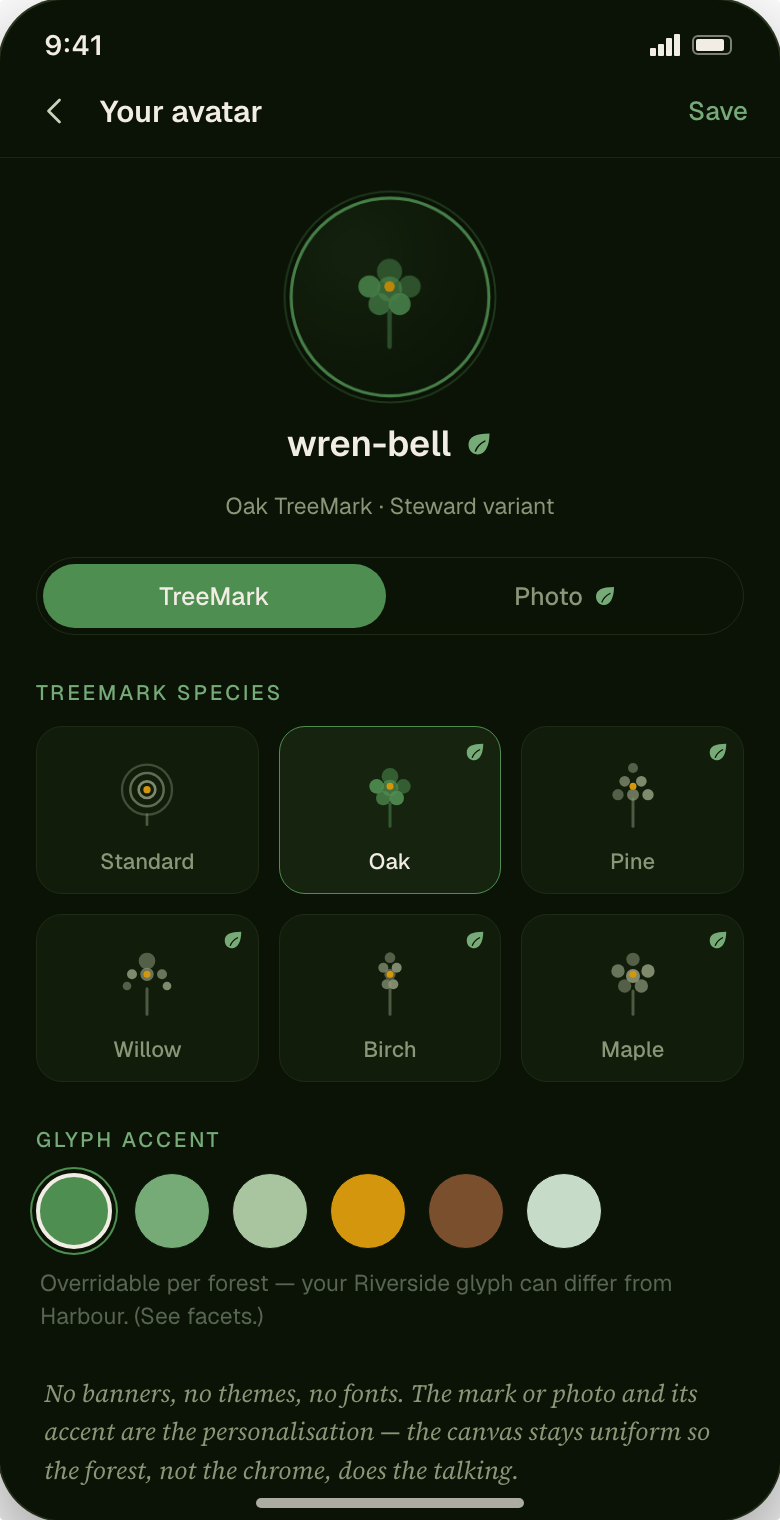
Identity marks arrived with all of this: a photo, or a drawn tree mark in a species and accent you choose. It appears wherever a handle does — the folk roster, search, the panel that rises when you tap someone, the members along the top of a personal forest.
A mark or a photo, and an accent — no banners, no themes, no fonts
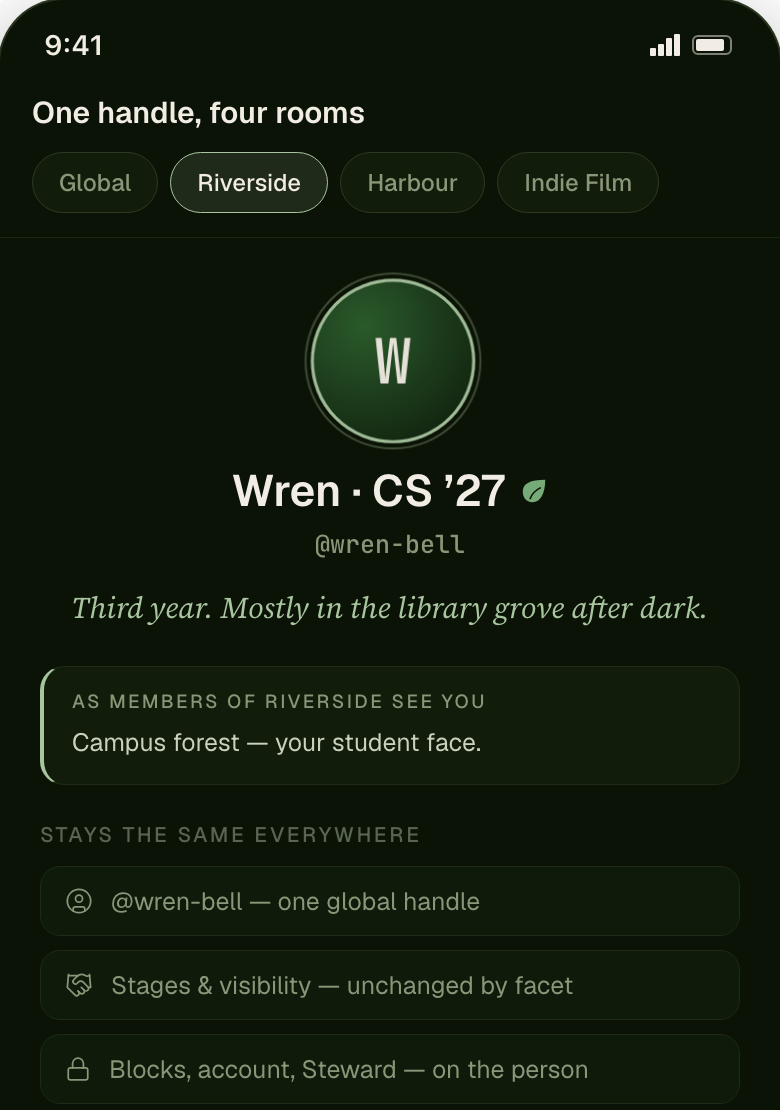
You can show your photo only to your Close folk; everyone below sees the tree mark instead. And a face can be set per forest, so the room you were tapped from decides which version of you turns up. Open someone cold and you get their global face.
One handle, four rooms — the handle and your stages never change
A face you haven’t earned isn’t dimmed or withheld. It was never sent.